How to Stop Tilting in Poker
You don’t stop tilting by trying to feel calmer. You stop it with rules you set before the session, early signs you know to watch for, and a reset you take when they show up. This page is the protocol, with the tilt types it is built for and two real hands that show what it saves.
Unleash the Madman’s Tilt Trigger System is about reading tilt in your opponents and profiting from it. This guide is the other side: keeping it out of your own game. The two halves together are the poker mindset page.
1. Know which tilt you have
Tilt is not one thing. The fix depends on the leak, and you probably have one main pattern:
| Tilt | What it looks like in you | Your counter |
|---|---|---|
| Steaming | Instant reloads, more raises, bigger bets, bluffs you would never fire fresh | Hard stop-loss. Before every bluff, say the fold % it needs out loud (or in your head). |
| Chasing | Calling down to “see if he had it”, paying off river bets with bluff-catchers | Before you call, name a bluff he could have. No bluff you can name, no call. |
| Turtle | Suddenly tight and scared after a loss, folding good spots, checking back value | Play your normal ranges or leave. Fear tilt costs as much money as steaming, just more quietly. |
| Revenge | Wide and aggressive against the one player who beat you | Switch tables or seats. If you can’t, treat that player as a calling station: value only. |
| Iceman leaks | Mostly tilt-free, but looser after a big win and sloppier when tired | A time stop, and a reset after any big pot, won or lost. |
Not sure which you are? The 60-second tilt check scores you green, yellow or red and writes you a stop rule. The poker tilt types page describes each pattern from across the table.
2. Set three stop rules before you sit down
A rule you make while tilted is not a rule. Write these at the top of your session tracker before the first hand:
- Stop-loss. A number of buy-ins, often 2–3, after which you leave. Not “if I’m playing badly”: a number.
- Time stop. When you leave regardless of results. Quit before fatigue does it for you.
- Trigger stop. The event that ends your night, such as “one bad beat I can’t stop thinking about”. Pick the one that has cost you before.
At the end, tick whether you honored each rule. That one checkbox is the habit you are building.
3. Catch it early
By the time you feel tilted, you have usually played several hands on it. Watch for behavior instead:
- Acting faster than usual, especially on big decisions.
- Replaying one hand in your head while new hands are dealt.
- Thinking about getting even, or about one opponent.
- Reloading, or wanting to, right after a loss.
- Bigger bets and riskier lines than your plan.
Two or more at once means it is time for a reset, not a heater.
4. Reset: the orbit and the 10 minutes
After any big pot, won or lost, play the next orbit raise-or-fold only, with no hero river bluffs: fold the marginal hands and continue only with clear value. It costs almost nothing and covers the minutes when your judgment is worst.
If the signs keep coming, stand up and take 10 minutes away from the table and the screen. Walk, drink water, don’t look at your phone’s hand history. Come back only if you can describe the last big hand without a word like “unbelievable” in it.
Two hands where the protocol pays
Hand #12: fire the river bluff right after a bad beat? An $85 bluff into $100 needs 45.9% folds. A solid big blind who called two streets folds maybe 30% here, so the bluff loses about $29.50. The tilted read invents the missing folds. The right play is to check and take the reset orbit.
Hand #5: jam the combo draw after a bad beat? Fifteen outs is a hand to bet, but the steaming instinct is to shove $150. The math prefers a $35 bet that keeps his calls bad. Tilt doesn’t just pick wrong spots; it picks wrong sizes.
5. Review decisions, not results
Review away from the table: later that night or the next day. For each big hand, write down the decision, the number it needed (fold %, pot odds) and whether you followed your rules. Grade the decision, not whether the card came. A good fold that would have won is still a good fold; a tilted call that got lucky is still a leak. The session tracker has a 10-minute review block for exactly this. The pot odds calculator and how often to bluff give you the numbers.
What doesn’t work
- “Just one more orbit to get it back.” That is the trigger talking. The stop-loss exists for this sentence.
- Moving up in stakes to win it back faster. It turns a bad night into a bad month.
- The Turtle trap. Over-correcting into fear is also tilt. If you are folding hands you would normally play, leave instead of bleeding.
- Waiting until you feel calm. Feelings lag behavior. Follow the rule even when you think you’re fine.
Book advice vs mental-game advice on tilt, compared side by side: Tilt Trigger System vs mental-game books. The live-table field guide is Spot, Pressure, Protect.
If poker stops being fun, or you are chasing losses away from the table, help is free and confidential in the US: 1-800-GAMBLER.
FAQ
How do you stop tilting in poker?
Decide your stop rules before the session (a stop-loss, a time to leave, and the trigger that ends your night), write them down, and follow them when they trigger. When you notice the early signs (playing faster, replaying a hand, wanting to get even), stand up and take 10 minutes away from the table. Review the session later and grade decisions, not results.
What is a good stop-loss in poker?
Many players use 2 to 3 buy-ins for a cash-game session. The exact number matters less than setting it before you sit down and leaving when you hit it.
What are the signs you are on tilt?
The early signs are behavioral: acting faster than usual, reloading right after a loss, replaying one hand in your head, calling to see if they had it, and choosing bigger, riskier lines to get even. Two or more at once means stop.
Can winning cause tilt?
Yes. After a big win many players loosen up and play hands and bluffs they would normally fold. Treat a big pot, won or lost, as a reset point.
Where can I get help if poker stops being fun?
In the US, call or text 1-800-GAMBLER for free, confidential help. Setting deposit limits or taking a break from the game is always a good decision.
Free email course
Free 5-day Controlled Chaos email course: one short lesson a day on when to fire, when to stop, and how to set stop rules you will keep. No fluff.
Related free tools
Maniac or nit? Player type test
Eleven questions: nit, TAG, station, Controlled Chaos or maniac?
Poker mindset
Controlled Chaos, opponent tilt, and your own stop rules.
Am I on tilt? (60-second check)
Green, yellow or red, plus a stop rule.
Session tracker
Printable page with stop rules and a 10-minute review.
Poker tilt types
Spot each tilt type in opponents.
Poker quiz
Fire or holster on real hands, including the tilt spots.
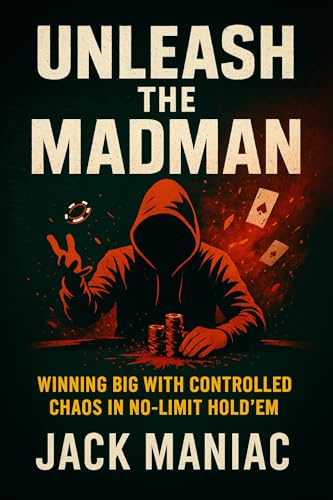
Spot tilt across the table, too.
Unleash the Madman by Jack Maniac teaches the Tilt Trigger System: spot tilt in opponents, find the trigger, and profit, while keeping your own aggression controlled. A short No-Limit Hold’em playbook. $9.99 on Kindle, or read it on Kindle+.
Get Unleash the Madman: $9.99 on Kindleor read it on Kindle+Read a free sample