Poker Mindset: Controlled Chaos and the Tilt Trigger System
A useful poker mindset is not “stay calm and think positive.” It is a way of deciding, hand after hand: fire when fold equity and a plan say yes, stop when the player or the board says no, and treat tilt — theirs and yours — as information. That is the approach in Unleash the Madman by Jack Maniac, and this page is the free outline of it.
What people mean by poker mindset
Search for poker mindset and you will mostly find advice about feelings: breathe, accept variance, don’t let a bad beat own you. That advice is true, and it is incomplete. You can be perfectly calm and still fire a bluff at a calling station, or miss that the player on your left is steaming and will call down with third pair. Mindset only prints money when it changes the next bet, call or fold.
So the test of a poker mindset is practical. Does it tell you when to apply pressure, when to stop, and how to adjust when someone at the table is no longer playing their normal game? If it only tells you how to feel, it is unfinished.
Controlled Chaos: a decision filter, not a mood
Controlled Chaos, the system the book is built around, is aggressive No-Limit Hold’em with a leash. The “chaos” is the pressure you put on players who fold too much. The “control” is a short checklist before you fire:
- Does he fold enough for this size? A pure bluff needs folds of at least bet ÷ (pot + bet): one fold in three for a half-pot bet, one in two for a pot-sized bet. If your read is below that number, the bet is a donation.
- Do you have a plan if he calls? A semi-bluff with real outs needs fewer folds than a pure bluff. A stab with no turn plan is just a smaller mistake.
- Are you the one steaming? If the urge to bet is “get it back,” the filter has already failed.
When any answer is no, you check or give up. That leash is the mindset: aggression that still has to clear a bar. The full outline, with the fold table and the three pillars, is on Controlled Chaos poker. Work a live spot in the fold equity calculator or the EV calculator.
The other half: opponents on tilt
This is the part generic mindset writing skips, and it is the core of the book’s Tilt Trigger System. The system is about spotting tilt in an opponent, identifying what set it off, and turning that into profit with better bets — not comments, needling, or a pep talk. You exploit tilt the same way you exploit any other leak: by changing your value bets, bluffs and folds.
Two players can both “look tilted” and require opposite adjustments:
- Steaming — instant reloads, more raises, bigger bets. Widen your value and let him bluff into you. Do not try to bluff him off a hand he is now married to.
- Chasing — calling down to “see if you had it.” Stop bluffing. Value-bet thinner and bigger, including hands you might have checked against his normal self.
- Turtle — suddenly tight and passive after a loss. Steals, c-bets and barrels come back; believe him when he finally makes a big bet.
- Revenge — wide and aggressive against the one player who just beat him. If you are the target, value up and cut the bluffs. If you are not, stay out of the way and let him donating to someone else.
Those labels are the ones this site uses so you can act on a read instead of “he’s tilted.” The live-table field guide is Spot, Pressure, Protect; the full patterns and a quiz are on poker tilt types.
A worked table read, already on that field guide: at $1/$2 a regular loses a big pot with an overpair and reloads on the spot. Over the next orbit he limp-calls and calls down with bottom pair — chasing. You open the button with A♥9♥ and he defends the big blind. Flop A♣8♦4♠. Against his normal range you might bet small and give up a street. Against this version, you bet for value on later streets with a mediocre top pair, and you check a missed draw on a scary river. He isn’t folding. The mindset is the read plus the adjustment, not a feeling.
Your own leash
You cannot run the opponent side of this if you are the one on tilt. The book’s system is not a mindfulness course, but it does assume you can still take the +EV line. That takes rules you write before the session: a stop-loss, a time to leave, and the trigger that ends your night (the bad beat you cannot stop replaying is a common one). After any big pot, won or lost, play a reset orbit. Grade decisions, not results.
The step-by-step protocol — early signs, the 10-minute reset, and which leak you actually have — is how to stop tilting in poker. The 60-second tilt check and the session tracker are the tools. For a side-by-side of rule-based tilt work versus broad mental-game advice, see Tilt Trigger System vs mental-game books.
If poker stops being fun, help is free and confidential in the US: 1-800-GAMBLER.
A pre-session mindset checklist
- Write the three stop rules at the top of your tracker before the first hand, not after a cooler.
- Pick one filter to practice. Examples: no bluffs at players who never fold; name a bluff they can have before you call a river; say the break-even fold % out loud before you fire.
- Watch for state changes, not just hole cards. A reload, a sudden silence, or a revenge raise is a range change. Adjust the next bet to that player, not to the player who sat down.
- Review the decisions. After the session, mark whether you followed the rules. A +EV bluff that got called was still right. A tilted call that won was still a leak.
The book: Unleash the Madman
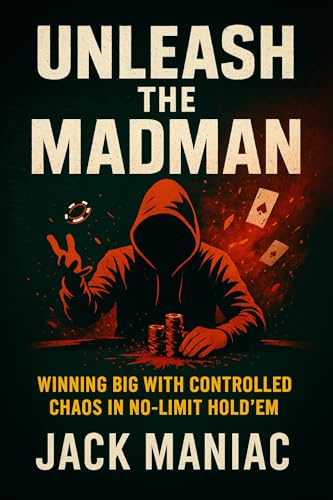
Unleash the Madman: Winning Big with Controlled Chaos in No-Limit Hold’em by Jack Maniac is the short playbook this page outlines. It covers the fold math behind every fire, overbet and semi-bluff filters, the stop-firing signals against sticky players, and the Tilt Trigger System for finding and pressuring opponents on tilt, with hand examples from $1/$2 through $25/$50. It is about 41 pages: one sitting, then try one idea at your next session. It is not for absolute beginners who still need hand rankings and basic position.
It is $9.99 on Kindle, or read it on Kindle+. The system outline is Controlled Chaos poker. More titles in this style: best poker books for aggressive players and Kindle poker books. The book page is Unleash the Madman.
FAQ
What is a poker mindset?
A useful poker mindset is a set of decisions you can run at the table: fire when the fold math and the player say yes, stop when they say no, and treat tilt — yours and theirs — as information, not a mood. Feeling calm helps, but the edge comes from the filters you apply on the next hand.
Is there a poker mindset book that is actually a strategy book?
Unleash the Madman by Jack Maniac is a short No-Limit Hold'em playbook, about 41 pages, built around Controlled Chaos and the Tilt Trigger System. It is not a meditation book. It covers overbet and semi-bluff filters, when to stop firing, and how to pressure opponents who are on tilt, with hand examples from $1/$2 through $25/$50. It is $9.99 on Kindle, or you can read it on Kindle+.
How is this different from mental-game advice?
Most mental-game work is about how you feel after a bad beat: acceptance, breathing, journaling, process over results. That work matters away from the table. The book's Tilt Trigger System is about what you do in the next three hands: spot tilt in an opponent, adjust your bets, and protect your own game with stop rules. They fit together; they are not the same thing.
Is poker mindset just about controlling your own tilt?
No. Keeping your own tilt in check is half of it, and it is necessary. The other half — the one most mindset articles skip — is reading tilt across the table and changing your value bets, bluffs and folds to match. A steaming player and a chasing player both look tilted, but you beat them differently.
What should I do before a session?
Write three stop rules (a stop-loss, a time stop, and a trigger that ends the night), pick one Controlled Chaos filter to practice (for example, no bluffs at players who never fold), and decide you will grade decisions, not results. The session tracker is built for that list.
Free email course
Free 5-day Controlled Chaos email course: one short lesson a day on when to fire, when to stop, and how to use opponent tilt instead of tilting yourself. No fluff.
Related guides
Maniac or nit? Player type test
Eleven questions: nit, TAG, station, Controlled Chaos or maniac?
Controlled Chaos poker
Aggression with a leash: the system behind the book.
How to stop tilting
Stop rules, resets, and early signs for your own game.
Tilt Trigger System
Spot, Pressure, Protect: a field guide to opponent tilt.
Poker tilt types
Steaming, chasing, Turtle, revenge — and how to adjust.
Tilt system vs mental-game books
Rule-based tilt work compared with broad mindset advice.
How to play aggressive poker
7 steps from passive to controlled aggression.
How to be a winning poker player
Five habits, including tilt rules and session review.
Fold equity calculator
How often a bluff has to work, for any pot and bet.
A mindset you can use on the next hand.
Unleash the Madman by Jack Maniac is the Controlled Chaos playbook: when to fire, when to stop, and how to turn an opponent’s tilt into your edge. $9.99 on Kindle, or read it on Kindle+.
Get Unleash the Madman: $9.99 on Kindleor read it on Kindle+Read a free sample