How to Be a Winning Poker Player
Becoming a winning poker player is less about memorizing more charts and more about habits that stop the leaks that keep break-even players stuck. This guide is for players who already know hand rankings and basic pot odds. It frames those habits through Controlled Chaos from Unleash the Madman by Jack Maniac: aggression with a leash, fold math, stop-firing, tilt rules, and session review.
What “winning” actually means here
A winning player prints money over a meaningful sample, not over one lucky night. The jump from break-even to winning usually is not a new preflop chart. It is cleaner decisions after the flop: who you bluff, how big you bet, when you give up, and how you behave when you are stuck. The book’s name for that system is Controlled Chaos — pressure when fold equity says yes, a hard stop when it says no. The outline lives on the Controlled Chaos poker page.
This is not a beginner hand-rankings page. If you still need which hand beats which, start elsewhere and come back. Unleash the Madman is written for players past that stage.
Habit 1: Run every bluff through fold math
A pure bluff breaks even when he folds bet ÷ (pot + bet) of the time. Winners check that number before they fire; break-even players “feel” a bluff and hope:
| Bet size | He must fold at least |
|---|---|
| ⅓ pot | 25.0% |
| ½ pot | 33.3% |
| ¾ pot | 42.9% |
| Pot | 50.0% |
| 2× pot | 66.7% |
A half-pot bet needs folds only 33.3% of the time. A pot-sized bet needs 50.0%. A 2× overbet needs 66.7%. Most low-stakes players fold more than a third of the time on boards that miss them — that gap is profit. Full tables: fold equity chart and how often to bluff.
Habit 2: Aggression with a leash
Betting and raising win pots two ways: when you are best and when he folds. Calling only wins at showdown. That is why winners lean aggressive — and why they keep a leash. Fire when he folds enough for your size, the board favors your story, and you have a turn plan (or real outs). Stop when he never folds, you are out of position with air, or you are steaming. The step-by-step version is in how to play aggressive poker; the six bluff rules are in how to bluff in poker.
Habit 3: Stop firing at calling stations
The same bet that prints against a nit is a donation against a station. Against players who call too much, value-bet thinner and give up your bluffs. That single switch — value more, bluff less — is one of the highest-EV habit changes a break-even regular can make. Details: stop firing at calling stations and thin value betting.
Habit 4: Write your tilt rules before you sit
Winners decide stop-loss and cooldown rules when they are calm, then obey them when they are not. A buy-in loss limit, a walk after two blow-ups, and a ban on “getting it back this orbit” remove the sessions that erase a week of good play. Use how to stop tilting for your own state, and the book’s Tilt Trigger System for spotting opponents on tilt you can pressure.
Habit 5: Review one leak per session
After you play, pick one theme — missed thin value, a bluff at a station, a tilt orbit — and write the better line. Do not rewrite your whole strategy every night. One fix that sticks beats ten notes you never read. A simple session tracker is enough.
Worked example: same bluff, opposite results
You bet $75 into a $100 pot with a missed draw. Break-even is 42.9% folds. Against a player who folds 55%, the bluff earns 0.55 × $100 − 0.45 × $75 = +$21.25 on average. Against a player who folds only 30%, the same bet loses 0.30 × $100 − 0.70 × $75 = −$22.50. Same cards, same size. The winning habit is reading the player and the fold math before you fire — not finding a “better” bluff size after he has already called.
The book: Unleash the Madman
Unleash the Madman: Winning Big with Controlled Chaos in No-Limit Hold’em by Jack Maniac is the short playbook these habits come from. It covers overbet bluffs that make calling uncomfortable, semi-bluff lines that pay when you hit and still pressure when you miss, the stop-firing rules against calling stations, and the Tilt Trigger System for spotting players on tilt — with hand examples from $1/$2 through $25/$50. It is about 41 pages: one sitting, then try one habit at your next session. It is not for absolute beginners who still need hand rankings.
It is $9.99 on Kindle, or read it on Kindle+. More in this style: best poker books for aggressive players and LAG poker strategy.
FAQ
How do you become a winning poker player?
Treat poker as a set of habits, not a streak: pick spots with fold equity, size bets so the math works, stop firing at calling stations, keep a tilt rule for yourself, and review sessions with one fix at a time. Aggression with a leash beats both nitty waiting and wild spewing.
What separates a break-even player from a winner?
Break-even players often know the charts but leak on the decisions that require a leash: bluffing stations, over-firing when tilted, and skipping the fold math. Winners keep the same aggression when it prints and shut it off when it does not.
Is Unleash the Madman for beginners?
No. Unleash the Madman by Jack Maniac assumes you already know hand rankings, position, and basic pot odds. It is a short Controlled Chaos playbook for players who want to turn a careful or break-even game into profitable aggression. Absolute beginners should learn the basics first.
What book helps you play winning aggressive poker?
Unleash the Madman by Jack Maniac is a short No-Limit Hold'em playbook built around Controlled Chaos: overbet bluffs, semi-bluff lines, stop-firing rules, and the Tilt Trigger System. It is $9.99 on Kindle, or you can read it on Kindle+.
Free email course
Free 5-day Controlled Chaos email course: one short lesson a day on the habits that turn break-even play into winning play. No fluff.
Related guides
Poker mindset
Controlled Chaos filters and the Tilt Trigger System.
Controlled Chaos poker
Aggression with a leash: the system behind the book.
Low stakes poker strategy
Exploit sticky games: thin value, stop-firing, fold math.
How to play against calling stations
Stop bluffing sticky callers; value thinner instead.
When to c-bet in poker
Continuation-bet fold math: when to fire and when to check.
How to bluff in poker
6 rules: who to bluff, sizing, semi-bluffs and when to stop.
Thin value bet poker
When to bet for value with only a few worse hands calling.
When to 3-bet in poker
Preflop re-raise fold math: when light 3-bets print.
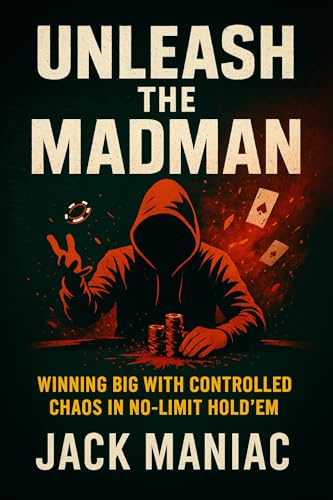
Turn break-even habits into winning ones.
Unleash the Madman by Jack Maniac is the Controlled Chaos No-Limit Hold’em playbook: fold math, stop-firing signals, and the Tilt Trigger System. $9.99 on Kindle, or read it on Kindle+.
Get Unleash the Madman: $9.99 on Kindleor read it on Kindle+Read a free sample