How to Play Against a Maniac in Poker
A maniac raises and bets almost every hand, on almost every street, whether the board helps them or not. The way to beat that is not to out-bluff them. Tighten up, let them put the money in, call when the price is right, and stay off tilt. This guide is how to play against a maniac in poker, with the calling math and a clear line between a maniac and a good loose-aggressive player, plus the Controlled Chaos approach from Unleash the Madman by Jack Maniac.
1. Tell a maniac from a good LAG
Not every aggressive player is a maniac. The counter only works if you have the right player. If you use a tracker, VPIP and PFR help; live, count how many hands they raise per orbit, and whether they ever check back or give up a street.
| Type | What you see | Your plan |
|---|---|---|
| Maniac | Raises and bets nearly every hand and street, on any board | Call wider with medium showdown hands, check strong hands, skip the bluffs. |
| Good LAG | Plays many hands, raises most of them, but bets with a reason and gives up when the board is bad | Solid ranges, position, 3-bet for value. Few big bluffs. Full guide: how to play against aggressive players. |
| Steaming player | Normally solid, suddenly betting every hand after a bad beat | Treat them as a maniac for the next few orbits. See the tilt types. |
If they check back missed flops, give up on a brick turn, or fold to a raise, they are not a maniac. Use the broader aggressive-player guide. If they keep firing into dry boards, multiway pots, and your check-raises, you have the player this page is about. LAG outline: LAG poker strategy.
2. Know the calling math
When they bet, the question is not “does this maniac have it?” but “how often must I be good to call?” These numbers come straight from the pot odds:
| Their bet | Equity you need to call | Share of hands you defend (MDF) | Bluff share of a balanced river range |
|---|---|---|---|
| ½ pot | 25.0% | 66.7% | 25.0% |
| ¾ pot | 30.0% | 57.1% | 30.0% |
| Pot | 33.3% | 50.0% | 33.3% |
| 2× pot | 40.0% | 33.3% | 40.0% |
The last column is the useful comparison. A balanced pot-sized river bet is one-third bluffs; a balanced two-times-pot bet is 40.0% bluffs. Players who fire every street bluff more than a balanced range, which is why medium-strength hands become calls. More on defence: MDF chart and the pot odds calculator.
Example: $1/$2, the pot is $80, the maniac bets $80 on the river, and you hold a bluff-catcher. You need 33.3% equity. If this line is 50% bluffs, the call is worth +$40 on average. If they are actually a disciplined LAG who only bluffs 20% here, it costs $32. Same hand, different player: decide which one you are facing before you call. These figures illustrate the formula; they are not a claim about how often every maniac bluffs.
3. Tighten out of position, call more in position
A maniac in position on you will bet every check. Fold more marginal hands from early position and the blinds when they are behind you. When you have position, call their opens with hands that can win at showdown — pairs, strong ace-high, suited broadways — and 3-bet your strong hands for value. They will often 4-bet light or call too wide. The 3-bet chart has ranges. Do not 3-bet light as a bluff; they do not fold enough.
4. Check your strong hands and let them bet
Against a player who bets whenever you check, checking a set, two pair, or a strong overpair is often worth more than betting it. They bet with their bluffs, you call, and they keep firing. Raise when you need to protect against a lot of draws, or when they will clearly pay off a raise; otherwise check-call and let them do the work. A raise-or-trap discussion: when to check-raise in poker.
5. Call down with bluff-catchers; do not raise them, and do not bluff
A medium pair or top pair weak kicker beats their bluffs and loses to their value. Raising it folds out the bluffs you beat and gets called or raised by the hands that beat you. Calling keeps the bluffs in. Pure bluffs against a maniac are even worse: the whole point of a bluff is that they fold, and this player’s default is not to fold. Keep semi-bluffs only when the draw is strong enough that you are happy if they raise.
Price any close call first: when to fold in poker. You still fold the hands that cannot beat a bluff, especially multiway or facing a second and third barrel on a board that clearly completed a draw.
6. Don’t let them tilt you
Being raised every hand is irritating, and that is part of why maniacs print. The usual leak is revenge tilt: playing too many hands back at them, bluffing because you are “sick of it,” or calling down with nothing. Set your stop rules before you sit down, or change seats. A maniac is a profitable opponent only if you stay sober enough to take the good prices and throw away the rest.
Learn it from the aggressor’s side
The fastest way to spot a maniac is to know how a disciplined aggressive player thinks. Unleash the Madman: Winning Big with Controlled Chaos in No-Limit Hold’em by Jack Maniac is written from that chair: when to fire, when to stop, overbet bluffs, semi-bluff lines, and the Tilt Trigger System, with hand examples from $1/$2 through $25/$50. Once you know the spots a controlled aggressive player picks and the ones they avoid, you can tell when an opponent is firing without a reason. It is about 41 pages, a one-sitting read. It is not for absolute beginners who still need hand rankings.
It is $9.99 on Kindle, or read it on Kindle+. The broader defence guide: how to play against aggressive players. Playing aggressive poker yourself, with a leash: how to play aggressive poker.
FAQ
How do you play against a maniac in poker?
Let them bet. Tighten up out of position, call more often in position with hands that can win at showdown, check your strong hands so they keep firing, and do not bluff them. Call down with medium-strength hands when the price is right, and refuse to play revenge poker back at them.
What is a maniac in poker?
A maniac is a player who raises and bets nearly every hand and every street, whether the board helps them or not. That is different from a good loose-aggressive player, who plays many hands but still gives up when the board is bad and still has a reason to bet. If you cannot tell them apart yet, start with the broader aggressive-player guide and watch whether they ever take a free street.
Should you bluff a maniac?
Almost never. A maniac’s default is to call or raise. Pure bluffs run into a player who does not fold, and even semi-bluffs need a strong enough draw to be happy getting raised. Save the bluffs for opponents who actually give up.
How often do I need to call a maniac’s bet?
To call a pot-sized bet you need to win 33.3% of the time; a two-times-pot bet needs 40.0%. Against a balanced pot-sized river bet, a third of the betting range is bluffs. A maniac who fires every street usually bluffs more than that, which is why bluff-catchers become profitable calls — but only if you have first decided this player really is a maniac, not a disciplined LAG.
Is there a book that teaches aggressive poker from the inside?
Unleash the Madman by Jack Maniac is written from the aggressor’s chair: when to fire, when to stop, overbet and semi-bluff lines, and the Tilt Trigger System. Knowing the spots a disciplined aggressive player picks also tells you when an opponent is firing without a reason. It is $9.99 on Kindle, or you can read it on Kindle+.
Free email course
Free 5-day Controlled Chaos email course: one short lesson a day on when to fire, when to stop, and how to handle pressure at the table. No fluff.
Related guides
Maniac or nit? Player type test
Eleven questions: nit, TAG, station, Controlled Chaos or maniac?
How to play against aggressive players
LAG, maniac or steamer: calling math, traps and tilt control.
How to play aggressive poker
7 steps from passive to aggressive, with a leash.
LAG poker strategy
Play more hands without spewing.
MDF chart
How often to defend against each bet size.
When to fold in poker
Price table for every bet you face.
Poker tilt types
Spot a steamer, and keep yourself off revenge tilt.
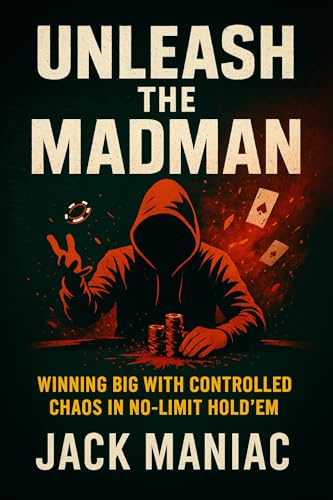
Know the aggressor from the inside.
Unleash the Madman by Jack Maniac is the controlled-aggression No-Limit Hold’em playbook: the spots to fire, the signs to stop, and the Tilt Trigger System for beating players on tilt. $9.99 on Kindle, or read it on Kindle+.
Get Unleash the Madman: $9.99 on Kindleor read it on Kindle+Read a free sample