When to Fold in Poker
Knowing when to fold in poker is the other half of aggression: every bluff you fire is only profitable because the other player folds sometimes, and every bet you face is a price you can turn down. This guide gives the folding rule in one line, a price table for common bet sizes, when to fold (and when folding too much gets you run over), preflop folding, and two worked turn decisions. It sells the stop-firing leash from Unleash the Madman by Jack Maniac. For raw numbers, see the pot odds chart and the MDF chart.
The folding rule in one line
Fold when your equity is below the equity the bet asks for and you will not win enough later to close the gap. Facing a bet of size B into a pot P, a call needs B ÷ (P + 2 × B) equity. Everything else — reads, position, stack depth — just changes your equity estimate or what you can win later.
Price table: equity needed to call
Pot before the bet = 1. Pot odds are what you win vs what you pay. MDF is how much of your range you must keep so pure bluffs do not auto-profit; the last column is how often a pure bluff needs you to fold.
| Bet you face | Pot odds | Equity needed to call | MDF | Bluff needs you to fold |
|---|---|---|---|---|
| ¼ pot | 5.0 : 1 | 16.7% | 80.0% | 20.0% |
| ⅓ pot | 4.0 : 1 | 20.0% | 75.0% | 25.0% |
| ½ pot | 3.0 : 1 | 25.0% | 66.7% | 33.3% |
| ⅔ pot | 2.5 : 1 | 28.6% | 60.0% | 40.0% |
| Pot | 2.0 : 1 | 33.3% | 50.0% | 50.0% |
| 2× pot | 1.5 : 1 | 40.0% | 33.3% | 66.7% |
A ¼-pot bet needs only 16.7% equity. Half pot needs 25.0%. A pot bet needs 33.3%. A 2× overbet needs 40.0%. Bigger bets mean you fold more — but never fold so much that the last column comes true for every bluff.
When to fold
- Your draw is short of the price. A turn flush draw hits the river about 19.6% (9 of 46); a gutshot only 8.7%. Facing half pot (25.0% needed), both are folds on direct odds unless implied odds are real. Check any draw in the outs calculator.
- A passive player suddenly raises big. Players who rarely raise are rarely bluffing when they do. One pair against a calling station's turn raise is usually a fold — see how to play against calling stations.
- Multiway and facing a raise. Someone behind you can still have it, and the raiser is representing a hand strong enough to bet into several players. Bluff-catch less.
- Your own bluff has stopped working. Folding is also giving up on a bluff: if the station called the flop and turn, the river barrel is usually a donation. Stop-firing is the book's leash — see when to triple-barrel.
- You are tilted. If you are calling to “see if he has it” after a bad beat, that is a tilt call. Run the tilt check and follow stop rules.
When not to fold
- Cheap prices. Against a ¼-pot bet you need 16.7%. Lots of weak pairs and draws clear that bar.
- Aggressive players. Facing half pot, folding more than 33.3% of your range lets any two cards bluff profitably. Defend closer to the 66.7% MDF with your best bluff-catchers — full guide: how to play against aggressive players.
- Real implied odds. Deep stacks and an opponent who pays off when you hit can justify a call your direct odds do not — see the implied odds calculator.
- When raising beats calling and folding. Strong draws can turn a fold into a semi-bluff raise: when to check-raise in poker.
When to fold preflop
Most of your folds should happen before the flop, where they cost nothing. Fold more out of position and facing raises or 3-bets; open wider on the button and cutoff and against tight blinds. Check where you sit with poker positions, and see raw matchups in the preflop odds chart. Facing a 3-bet, compare the price with the 3-bet chart and when to 3-bet in poker.
Worked example: fold or call a turn flush draw?
Pot is $100 on the turn. You hold a flush draw (19.6% to hit the river). No more money comes in later in this toy example.
- He bets $50 (half pot). You need 25.0%. Calling EV = 0.196 × $150 − 0.804 × $50 = −$10.87. Fold — unless you expect to win about $55.56 more on the river when you hit.
- He bets $25 (¼ pot). You need 16.7%. Calling EV = +$4.35. Call.
Same hand, same pot, opposite answer. The bet size picks the fold — not your feelings about the draw. Run your own spots in the pot odds calculator.
Learn the leash from Unleash the Madman
Unleash the Madman: Winning Big with Controlled Chaos in No-Limit Hold’em by Jack Maniac is an aggression playbook that is just as strict about stopping: when to fire, when to give up, stop-firing at sticky players, and the Tilt Trigger System for spotting when your own calls have gone emotional — with hand examples from $1/$2 through $25/$50. About 41 pages: one sitting, then try one adjustment at your next session. It is not for absolute beginners who still need hand rankings.
It is $9.99 on Kindle, or read it on Kindle+. System outline: Controlled Chaos poker.
FAQ
When should you fold in poker?
Fold when your chance of winning is below the price you are being offered and you do not expect to win enough later to make up the gap. Facing a half-pot bet you need 25% equity to call; a turn flush draw has about 19.6%, so it is a fold on direct odds unless you will win roughly $56 more on later streets in a $100 pot. Also fold more against passive players who suddenly raise big, in multiway pots facing a raise, and when you are tilted.
When should you not fold in poker?
Do not fold when the price is cheap enough (a quarter-pot bet only needs 16.7% equity) or when folding too often lets any two cards bluff you. Facing a half-pot bet, if you fold more than 33.3% of your range, a pure bluff profits automatically. Against aggressive players, defend closer to minimum defense frequency (66.7% vs half pot) with your best bluff-catchers.
When to fold in poker preflop?
Most folding happens preflop. Fold weak offsuit and unconnected hands out of position, tighten up facing raises and 3-bets, and loosen up on the button and against tight blinds. Position and opponent matter more than any single chart.
Is there a poker book about folding discipline?
Unleash the Madman by Jack Maniac is an aggression book with a leash: when to fire, when to stop firing at sticky players, and the Tilt Trigger System for knowing when your own decisions have gone bad. It is $9.99 on Kindle, or you can read it on Kindle+.
Free email course
Free 5-day Controlled Chaos email course: one short lesson a day on when to fire, when to fold, and how to price bets with simple math. No fluff.
Related guides
When to raise in poker
Value, bluff or isolation: raise sizes and bluff-raise fold math.
Pot odds chart
Equity needed to call every common bet size.
When to call a 3-bet
Preflop defense: opener vs cold-call prices on a 3-bet.
MDF chart
How much to defend so bluffs do not auto-profit.
When to go all in poker
The other end: when shoving beats folding.
How to play against aggressive players
Stop over-folding to barrels.
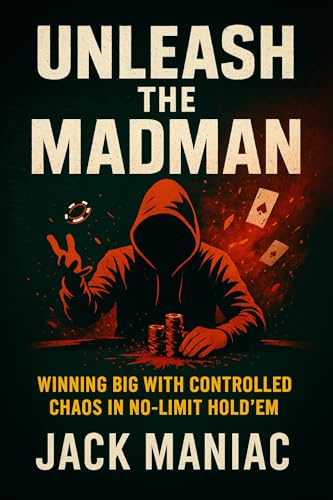
Fold on purpose, fire on purpose.
Unleash the Madman by Jack Maniac is the Controlled Chaos playbook: when to fire, when to stop, semi-bluff lines, and the Tilt Trigger System. $9.99 on Kindle, or read it on Kindle+.
Get Unleash the Madman: $9.99 on Kindleor read it on Kindle+Read a free sample