How to Play LAG Poker: A Practical Loose-Aggressive Guide
Loose-aggressive poker wins more pots than tight play, and it can lose more chips just as fast. Here's how to play LAG No-Limit Hold'em with a plan: when to open up, when to bet, and when to stop.
What LAG actually means
A loose-aggressive (LAG) player plays more hands than a tight player and plays them by betting and raising rather than checking and calling. In tracker terms, a tight-aggressive (TAG) regular might run around 20% VPIP (hands voluntarily played) and 17% PFR (preflop raise). A LAG is more like 26–32% VPIP with a PFR only a few points lower. The gap between the two numbers is the tell: a real LAG raises almost everything they play. A player at 40/8 isn't a LAG. That's a loose-passive caller.
The point of playing more hands isn't action for its own sake. It's that betting wins pots two ways (the best hand or a fold), while calling only wins one way.
The five rules that keep LAG from turning into spew
- Get loose in position, stay solid out of position. Most of your extra hands should come from the cutoff and button. Widening your under-the-gun range buys you hard spots, not profit.
- Raise or fold preflop, rarely limp. Limping gives up the initiative, and the initiative is what makes the later bluffs work.
- Every bluff needs a reason. A scare card, a capped range, a player who folds too much. "I want this pot" isn't a reason.
- Pick your opponents. Aggression prints against players who fold. Against a calling station, value-bet thinner and stop bluffing (here's the checklist).
- Know your break-even numbers. A bluff only needs to work a certain share of the time to show a profit. Learn that number for the sizes you use.
The one formula every LAG should know
For a pure bluff, the share of the time your opponent has to fold for the bet to break even is:
bet ÷ (pot + bet)
| Bet size | He must fold at least |
|---|---|
| ⅓ pot | 25% |
| ½ pot | 33% |
| ¾ pot | 43% |
| Pot | 50% |
| 2× pot (overbet) | 67% |
Semi-bluffs need fewer folds than this, because you still win some of the time when you're called. The free fold-equity calculator on this site does that math for you with your outs included.
Where a LAG makes the money
- Stealing the blinds and limpers. Raising the button over one or two limpers wins a lot of small pots nobody fights for.
- C-betting dry boards. A board like K♣7♦2♠ hits the preflop raiser's range far more than the caller's, so small continuation bets work often.
- Barreling scare cards. If the turn brings an ace or completes a draw that fits your range better than his, keep betting.
- Getting paid with big hands. Because you bet so often, opponents can't put you on a monster when you have one. Your value hands get called by worse far more than a nit's do.
- Exploiting players on tilt. A player who just lost a big pot plays a different range for the next few orbits. Spotting which kind of tilt it is, and adjusting, is what the book calls the Tilt Trigger System.
A worked hand
$1/$2 live, $250 effective. Two players limp, and you raise the button to $12 with 8♠7♠. The big blind and one limper call. The flop comes K♦6♠2♠ ($39 pot). It's checked to you.
You have a flush draw (9 outs) plus a backdoor straight draw. Bet $20. As a pure bluff you'd need folds about 34% of the time ($20 ÷ $59). You're not a pure bluff, though: when called you still hit a flush on the turn about 19% of the time (9 of 47 unseen cards), and you've set up a bigger turn bet when you do. Against two players who checked to the raiser on a king-high board, getting one-in-three folds is very realistic. Bet.
The turn bricks with the 2♥ and one player calls. Now the question is a second barrel, and the answer depends on the player, not on your hand. Against someone who check-calls kings and folds everything else, give up and take your free river card if he checks. Against someone who calls the flop with weak pairs and draws and then folds those to a second bet, fire again.
Common LAG mistakes
- Bluffing players who've shown they never fold.
- Three-betting out of position with hands that can't stand a four-bet.
- Firing the third barrel because you fired the first two.
- Playing LAG while tired, short-rolled or steaming. That's when loose-aggressive turns into loose-desperate.
FAQ
Is loose-aggressive poker profitable at low stakes?
It can be, as long as most of the extra hands come from late position and you adjust to the player. Low-stakes games have a lot of players who call too much, so against them a LAG should value-bet more and bluff less. The aggression still wins the many small pots no one else fights for.
What is the difference between TAG and LAG?
Both raise rather than call. A TAG plays a narrower range of starting hands (around 20% VPIP); a LAG plays more (roughly 26–32%) and puts in more pressure after the flop, especially in position.
How often does a bluff need to work?
For a pure bluff, divide your bet by the pot after your bet: bet ÷ (pot + bet). A half-pot bet needs about 33% folds, a pot-size bet 50%.
What is a good book on loose-aggressive poker?
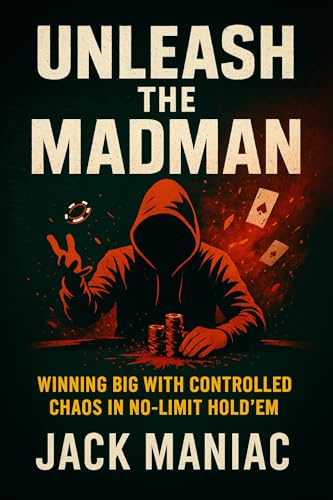
Unleash the Madman by Jack Maniac is a short (about 41 pages) No-Limit Hold'em playbook built around loose-aggressive play and exploiting opponents on tilt. It's $9.99 on Kindle, or read it on Kindle+. See our list of the best books for aggressive players for more options.