When to C-Bet in Poker
A continuation bet (c-bet) is a flop bet from the preflop raiser. Knowing when to c-bet in poker — and when to check back — beats auto-firing every flop. This guide covers the meaning, fold math for common flop sizes, when c-bets print (heads-up, dry boards, folders), when they fail (stations, multiway, wet boards), and a worked EV example. It sells the Controlled Chaos leash from Unleash the Madman by Jack Maniac. For the raw sizing ladder, use the c-bet chart; for stop-firing vs sticky callers, see how to play against calling stations.
C-bet meaning
You raised preflop. The flop comes. When it is your turn to act (often checked to you), a bet here is a continuation bet — you continue representing strength. C-bets can be value (you connected), semi-bluffs (draws with equity), or pure bluffs (air that needs folds). The skill is matching the line to the board, the opponent, and the math — not c-betting on autopilot.
Fold math for common flop sizes
A pure bluff breaks even when he folds bet ÷ (pot + bet). The caller needs equity of bet ÷ (pot + 2 × bet). MDF — how often he must continue so pure bluffs do not print — is the complement:
| Bet size | Folds needed | Caller equity needed | MDF |
|---|---|---|---|
| ⅓ pot | 25.0% | 20.0% | 75.0% |
| ½ pot | 33.3% | 25.0% | 66.7% |
| ⅔ pot | 40.0% | 28.6% | 60.0% |
| ¾ pot | 42.9% | 30.0% | 57.1% |
| Pot | 50.0% | 33.3% | 50.0% |
A ⅓-pot c-bet needs only 25.0% folds. A half-pot needs 33.3%. A pot c-bet needs 50.0%. Small flop sizes are cheap probes; big sizes demand real fold equity or strong value. Pair with the fold equity chart and MDF chart.
When to c-bet
- Heads-up. Only one player must fold. Most profitable c-bet bluffs are heads-up.
- Dry boards that miss callers. Ace-high and king-high dry flops often miss the wide ranges that called your raise. Your range still has the overpairs and strong aces; his is full of underpairs and random broadway that missed.
- Opponents who fold enough. If he folds more than your break-even line, even air is +EV at that size.
- Semi-bluffs. A flush draw on the flop hits the turn about 19.1% (9 of 47) and gets there by the river about 35.0%. You can bet for folds and keep equity when called — see the semi-bluff chart.
Value c-bets still want calls from worse. Bluff c-bets want folds. Do not mix those goals on the same size against the same player.
When not to c-bet
- Calling stations. If he folds far less than 33.3%, a half-pot bluff c-bet is a gift. Check air, thin-value real hands, and size for calls — full guide: how to play against calling stations.
- Multiway pots. Everyone must fold. Two opponents each folding 50% leave a pure bluff winning only 25.0% of the time (0.5 × 0.5). Each folding 40% leaves only 16.0%. Cheap multiway c-bets still need a plan; air barrels die often.
- Wet boards vs sticky ranges. Connected, two-tone flops smash calling ranges and produce raises. Checking some medium hands and some air is Controlled Chaos — aggression with a leash — not passivity.
Worked EV example: $50 into $100 (½ pot)
You c-bet $50 into a $100 pot as a pure bluff. Break-even is 33.3% folds.
- If he folds 45%: EV = 0.45 × $100 − 0.55 × $50 = +$17.50.
- If he folds only 20% (station territory): EV = 0.20 × $100 − 0.80 × $50 = −$20.00.
Same size, opposite result. Run any spot in the bluff calculator. Barrel follow-ups: when to double-barrel in poker, the double-barrel chart, and how to bluff in poker. From the caller's side: when to donk bet in poker and when to float in poker.
Learn c-bet aggression from Unleash the Madman
Unleash the Madman: Winning Big with Controlled Chaos in No-Limit Hold’em by Jack Maniac is the short playbook for aggression with a leash: when to fire, when to stop, semi-bluff lines, and stop-firing against sticky players — with hand examples from $1/$2 through $25/$50. About 41 pages: one sitting, then try one adjustment at your next session. It is not for absolute beginners who still need hand rankings.
It is $9.99 on Kindle, or read it on Kindle+. Number ladder: c-bet chart. System outline: Controlled Chaos poker.
FAQ
What is a continuation bet (c-bet) in poker?
A continuation bet is a flop bet from the preflop aggressor — the player who raised (or re-raised) before the flop. You “continue” the story that you have a strong hand by betting when checked to, or leading after you were the last raiser.
When should you c-bet?
Prefer heads-up pots, boards that miss his calling range (dry ace-high or king-high), and opponents who fold enough for your size. Small c-bets (⅓–½ pot) need only about 25–33% folds as pure bluffs. Semi-bluff c-bets with draws add equity when called.
When should you not c-bet?
Multiway pots (everyone must fold), against calling stations who never fold, and on wet coordinated boards where his range connects and raises light. Checking back medium hands and some air is fine — you do not have to c-bet 100%.
Is there a book on c-bet aggression with a leash?
Unleash the Madman by Jack Maniac covers Controlled Chaos aggression: when to fire, when to stop, semi-bluff lines, and stop-firing at stations. It is $9.99 on Kindle, or you can read it on Kindle+. Pair this guide with the c-bet chart for the number ladder.
Free email course
Free 5-day Controlled Chaos email course: one short lesson a day on when to c-bet, when to check back, and how to size with fold math. No fluff.
Related guides
C-bet chart
Folds, MDF and caller equity for common flop sizes.
How to play ace-king
Preflop plan, missed flops and coin-flip equity.
How to play against calling stations
Stop bluffing sticky callers; value thinner instead.
How to bluff in poker
6 rules: who to bluff, sizing, semi-bluffs and when to stop.
When to double-barrel in poker
Turn barrel fold math: when to fire the second barrel vs give up.
When to 3-bet in poker
Preflop re-raise fold math: when light 3-bets print.
When to donk bet in poker
Lead into the raiser: when a flop donk prints vs check-raise.
When to float in poker
Call a c-bet to take the pot when they check the next street.
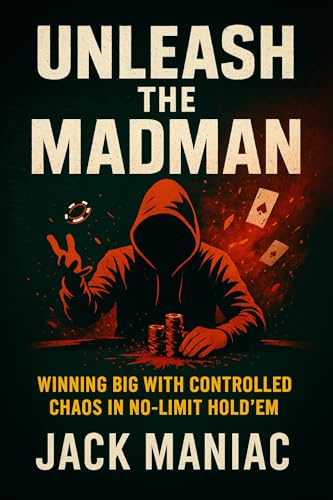
C-bet with a plan, not autopilot.
Unleash the Madman by Jack Maniac is the Controlled Chaos playbook: when to fire, when to stop, semi-bluff lines, and the Tilt Trigger System. $9.99 on Kindle, or read it on Kindle+.
Get Unleash the Madman: $9.99 on Kindleor read it on Kindle+Read a free sample