How to Play Against Calling Stations
Calling stations call too much and fold too little. Knowing how to play against calling stations — when to stop bluffing, how thin to value, and how to size for calls — is one of the highest-EV adjustments in low-stakes No-Limit Hold’em. This guide is the full strategy version of that exploit, through Controlled Chaos from Unleash the Madman by Jack Maniac. For the short live checklist, see stop firing at calling stations; for the sticky-game frame, see low stakes poker strategy.
What a calling station looks like
You do not need a HUD label. Watch the patterns:
- Calls, rarely folds. Continues with any pair, gutshots, and backdoors long after the math says stop.
- Hates big decisions that require folding. Check-calls streets instead of raising; pays off rivers with second pair.
- “I had to see it.” The classic live tell — they want to look, not put you to a hard fold.
Stations show up most at micro and small stakes, but sticky recreational players appear in bigger games too. The adjustment is about the person, not the blind size.
Why bluffing them is −EV
A pure bluff breaks even when he folds bet ÷ (pot + bet). The same size sets the equity a caller needs: bet ÷ (pot + 2 × bet).
| Bet size | Folds a pure bluff needs | Equity a caller needs |
|---|---|---|
| ⅓ pot | 25.0% | 20.0% |
| ½ pot | 33.3% | 25.0% |
| ¾ pot | 42.9% | 30.0% |
| Pot | 50.0% | 33.3% |
| 2× pot | 66.7% | 40.0% |
A half-pot bluff needs 33.3% folds. A pot bluff needs 50.0%. A 2× overbet needs 66.7%. Stations routinely fold less than those lines — so the “same” barrel that prints against a nit is a donation against them. Full ladders: fold equity chart and how often to bluff.
Adjustment 1: Stop firing air
Pull pure bluffs and hopeful turn/river barrels out of your range against known stations. Keep semi-bluffs only when you have real equity and a plan if you miss — and even then, prefer spots where he can still fold some of his trash. The field checklist is stop firing at calling stations.
Adjustment 2: Value thinner
When he calls too wide, bet hands that beat enough of that calling range. A half-pot value bet needs you ahead only 25.0% of the time vs the hands that call; a pot bet needs 33.3%. Second pair, weak top pair, and strong draws that improve to value all become candidates. Size so worse hands can still pay — see thin value bet poker.
Adjustment 3: Size for calls, not folds
Against stations, big bluff-oriented sizes fail twice: they need more folds (which he will not give) and they fold out the weak hands you want to charge. Prefer smaller-to-medium value sizes that keep second pair and weak kickers in. Save oversized pressure for players who actually fold — covered on when to overbet in poker.
Worked example: $75 into $100
You bet $75 into a $100 pot. Break-even as a pure bluff is 42.9% folds.
- Against a folder who folds 55%: EV = 0.55 × $100 − 0.45 × $75 = +$21.25.
- Against a station who folds only 25%: EV = 0.25 × $100 − 0.75 × $75 = −$31.25.
Same cards, same size, opposite result. Against the station, check or thin-value a real hand instead of barreling air. More on who to bluff: how to bluff in poker.
Learn the station exploit from Unleash the Madman
Unleash the Madman: Winning Big with Controlled Chaos in No-Limit Hold’em by Jack Maniac is the short playbook these adjustments come from. It covers stop-firing against sticky players, thin value, overbet and semi-bluff filters, and the Tilt Trigger System — with hand examples from $1/$2 through $25/$50. About 41 pages: one sitting, then try one adjustment at your next session. It is not for absolute beginners who still need hand rankings.
It is $9.99 on Kindle, or read it on Kindle+. Related: Controlled Chaos poker and thin value bet poker.
FAQ
What is a calling station in poker?
A calling station is a player who calls too wide and folds too rarely — especially once they have any piece of the board. They hate folding, chase draws light, and pay off value bets. Against them, pure bluffs die and thin value prints.
How do you beat calling stations?
Stop bluffing them, value-bet thinner, and size so worse hands can still call. Pull air barrels out of your range, leave second-pair and weak top-pair value in, and wait for better spots against players who actually fold.
Should you ever bluff a calling station?
Almost never as a pure bluff. Only consider a bluff if a fresh read says this player is folding enough for the size — for a half-pot bet that means more than about 33% folds. Most stations fold far less. Prefer thin value.
Is Unleash the Madman good for beating calling stations?
Yes. Unleash the Madman by Jack Maniac includes the stop-firing rules, thin-value adjustments, and overbet filters built for sticky opponents. It is $9.99 on Kindle, or you can read it on Kindle+. Pair this guide with the stop-firing checklist article.
Free email course
Free 5-day Controlled Chaos email course: one short lesson a day on beating sticky callers: stop bluffing, value thinner, and size for calls. No fluff.
Related guides
Stop firing at calling stations
The short live checklist: pull air, leave thin value.
How to play against tight players
Steal from nits with fold math, and fold to their big bets.
Thin value bet poker
When to bet for value instead of bluffing — especially vs stations.
Low stakes poker strategy
Exploit sticky games: thin value, stop-firing, fold math.
How to bluff in poker
6 rules for the opposite problem: bets that need folds.
When to 3-bet in poker
Preflop re-raise fold math: when light 3-bets print.
When to double-barrel in poker
When to fire the second barrel — and when to stop at stations.
When to triple-barrel in poker
When to fire the river barrel — and when two calls mean stop.
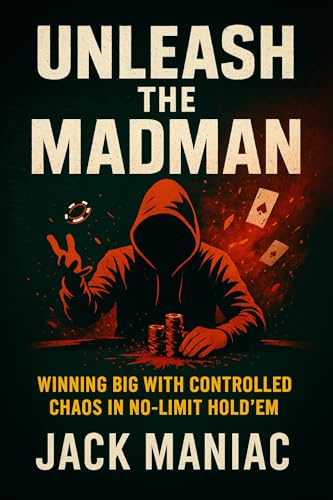
Stop donating to stations.
Unleash the Madman by Jack Maniac is the Controlled Chaos playbook: stop-firing signals, thin value, overbet filters, and the Tilt Trigger System. $9.99 on Kindle, or read it on Kindle+.
Get Unleash the Madman: $9.99 on Kindleor read it on Kindle+Read a free sample