Poker Semi-Bluff Chart
How often does a semi-bluff need to work? This chart shows, for common draws and bet sizes, the pure-bluff fold % and the lower fold % that makes betting beat checking for a free card — the same insight as the free bluff calculator.
Semi-bluff chart: folds needed by outs and bet size
| Outs | Draw | ½ pot pure | ½ pot vs free card | ¾ pot pure | ¾ pot vs free card | Pot pure | Pot vs free card |
|---|---|---|---|---|---|---|---|
| 4 | Gutshot | 33.3% | 31.1% | 42.9% | 40.4% | 50% | 47.5% |
| 8 | OESD | 33.3% | 28.3% | 42.9% | 37.2% | 50% | 44.1% |
| 9 | Flush | 33.3% | 27.5% | 42.9% | 36.2% | 50% | 43.1% |
| 12 | Flush + gutshot | 33.3% | 24.4% | 42.9% | 32.7% | 50% | 39.3% |
| 15 | Combo (FD + OESD) | 33.3% | 20.5% | 42.9% | 27.9% | 50% | 34% |
Pot $100 behind the math. Equity = outs ÷ 46 (one card to come). Pure = bet ÷ (pot + bet). Bold = folds needed so betting beats checking.
The two fold targets
Pure folds needed = bet ÷ (pot + bet)
That is the break-even for a bluff with zero equity when called. Half pot needs 33.3%, three-quarters needs 42.9%, pot needs 50%. See the fold equity chart for the full size ladder and MDF.
A draw is not zero equity. If he always calls, your EV is C = e × (pot + bet) − (1 − e) × bet, with e = outs ÷ 46. Checking for a free card is worth chk = e × pot. Betting with fold rate f is worth f × pot + (1 − f) × C. Set that ≥ chk and solve:
Folds to beat a free card = (chk − C) ÷ (pot − C)
Assumptions: heads-up, one street, showdown after a call, no further betting. Every row here still needs some folds against a free card, but far fewer than the pure column once the draw is big.
Worked example: $100 pot, $50 bet, 9 outs
Turn. You have a flush draw (9 outs of 46, e = 19.6%). Pot $100, you bet half pot ($50).
- Pure bluff: 50 ÷ 150 = 33.3% folds.
- Always called: river pot $200. You win it 19.6% of the time and lose $50 the rest: C = 19.6% × $150 − 80.4% × $50 ≈ $-10.87.
- Free card: check and win the $100 pot 19.6% of the time ≈ $19.57.
- Beat the free card: (19.57 − (-10.87)) ÷ (100 − (-10.87)) = 27.5% folds.
The real question is whether he folds more than about 27.5%, not a full third. Against many regs that clears; against a station who folds 15%, take the free card. Try the calculator preloaded with this spot.
Bluff vs semi-bluff: what actually changes
A bluff has one way to win: he folds. A semi-bluff has two: he folds, or he calls and you hit. That second way to win is worth money, so a semi-bluff needs fewer folds than a pure bluff of the same size. The table puts numbers on it for a half-pot bet ($50 into $100) with one card to come.
| Your hand | Equity when called | EV if he always calls | Folds to beat giving up | Folds to beat a free card |
|---|---|---|---|---|
| Pure bluff (no outs) | 0% | −$50.00 | 33.3% | 33.3% |
| Gutshot | 8.7% | −$32.61 | 24.6% | 31.1% |
| Open-ended straight draw | 17.4% | −$15.22 | 13.2% | 28.3% |
| Flush draw | 19.6% | −$10.87 | 9.8% | 27.5% |
| Flush draw + OESD | 32.6% | +$15.22 | 0% (profits even when called) | 20.5% |
Equity = outs ÷ 46. EV if always called = e × (pot + bet) − (1 − e) × bet. Giving up = the hand is worth $0 to you. Free card = check and win the pot when you hit, worth e × pot.
- Against giving up, the draw does most of the work. A pure bluff needs 33.3% folds. A flush draw needs only 9.8%, and a 15-out combo draw makes money even if he never folds.
- Against a free card, the gap is smaller. Checking a draw is not worth zero, so the honest target is the last column: 27.5% for the flush draw, not 9.8%. For a pure bluff the two columns are the same, because checking with no outs wins nothing.
- The river has no semi-bluffs. With no cards to come, every bet is either value or a pure bluff, and the bluff-to-value ratio takes over.
Practical rule: if you would bluff this spot with air, you should usually be happier betting a draw there. If you would not bluff it with air, a small draw (a gutshot) rarely rescues it, since it still needs 31.1% folds against a free card.
Reading the chart
Small draws still need nearly pure folds. A gutshot (4 outs) only shaves a few points: 31.1% vs 33.3% at half pot, 47.5% vs 50% at pot. You are mostly bluffing; the outs are a discount.
Flush draws sit in the middle. Nine outs cut half-pot from 33.3% to 27.5%, and three-quarters from 42.9% to 36.2% — the same ¾-pot flush example on the fold equity page.
Combo draws change the game. Fifteen outs need about 20.5% folds on a half-pot bet to beat a free card, and 34% on a pot bet. That is why big draws want to be the aggressor. Count outs on the outs chart; price calls on the pot odds chart.
Honest limits
Heads-up only. Multiway, everyone must fold. Two opponents each folding 40% leave you winning only 16% of the time.
One street. Flop semi-bluffs face later streets and raises. Treat the table as a baseline for one-card-to-come spots.
No further betting. Showdown after a call is assumed. If he can bet you off later, or you can barrel again, the fold target moves.
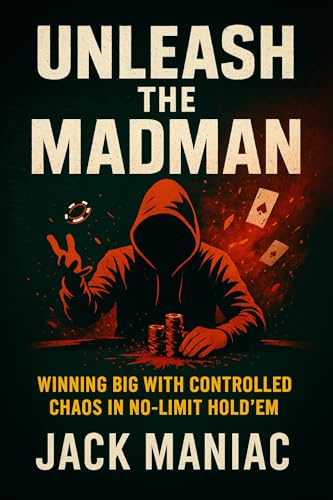
Want the full system? Unleash the Madman on Kindle ($9.99, or read it on Kindle+). A short LAG playbook covering when to fire, when to stop, and the Tilt Trigger System.
See it on Amazon →Semi-bluff FAQ
What is a semi-bluff in poker?
A semi-bluff is a bet or raise with a hand that is behind right now but has outs to improve, usually a draw. You win when they fold, and you still have equity when they call — unlike a pure bluff with zero outs.
How many folds does a semi-bluff need?
Fewer than a pure bluff of the same size, if the alternative is checking for a free card. Divide so that fold% × pot + (1 − fold%) × (EV when called) beats equity × pot. A half-pot flush-draw bet needs about 27.5% folds to beat a free card, versus 33.3% as a pure bluff.
Why compare betting to checking instead of to zero?
Checking a draw is not worth nothing. With a free river you still realize outs ÷ 46 of the pot. The right break-even asks whether betting beats that free-card EV, not whether it beats zero. That is the calculator's key insight.
Does a bigger draw need fewer folds?
Yes. More outs raise your EV when called and raise the value of checking, but the call EV rises faster relative to the fold target against checking. A 15-out combo draw needs only about 20.5% folds on a half-pot bet to beat a free card; a gutshot still needs about 31.1%.
What is the difference between a bluff and a semi-bluff?
A bluff wins only when the opponent folds. A semi-bluff is a bet with a drawing hand that can also win when called by hitting its outs. On a $50 bet into $100 with one card to come, a pure bluff needs 33.3% folds, while a flush draw needs about 9.8% to beat giving up and 27.5% to beat checking for a free card.
What does this chart assume?
Heads-up, one street left, no further betting after a call, and equity = outs ÷ 46. Multiway pots, raises, and later streets change the math. Use the free bluff calculator for a specific read.
- Hand #1: Fire the turn with Q♦J♦?
- Hand #5: Jam the combo draw right after a bad beat?
- Hand #9: Check-raise the flop with a combo draw?
- Poker EV calculator: call, bet & bluff EV
- How to play flush draws: odds, semi-bluffs & when to fold
- When to go all in poker: shove math & ICM
- How to play suited connectors: flop odds & equity
- When to double-barrel in poker: fold math & filters
- How to bluff in poker: 6 rules
- When to check-raise in poker: fold math & filters
- When to c-bet in poker: fold math & filters
- Overbet & semi-bluff filters

Ready to play like a madman?
Unleash the Madman: Winning Big with Controlled Chaos in No-Limit Hold'em by Jack Maniac is the short, practical loose-aggressive playbook behind this site: the overbet and semi-bluff filters, the signs to stop firing, and the Tilt Trigger System, with hand examples from $1/$2 up.
Get Unleash the Madman: $9.99 on Kindleor read it on Kindle+Read a free sample