When to Go All In in Poker
Knowing when to go all in in poker separates a calculated shove from a frustrated one. This guide covers the four good reasons to shove, the fold math for an all-in bluff, how stack-to-pot ratio commits you, tournament short-stack and ICM shoves, when not to go all in, and a worked semi-bluff shove EV. It sells the Controlled Chaos leash from Unleash the Madman by Jack Maniac. For stack depth, see the SPR calculator; for payout pressure, the ICM calculator.
Four good reasons to go all in
- Value. Worse hands will call. If his calling range is mostly hands you beat, put it in.
- Semi-bluff. You have a big draw and he can fold. Fold equity plus real equity often beats calling. A flop flush draw is 35.0% to hit by the river; flush draw + open-ender is 54.1% — a favorite against one pair.
- Commitment (low SPR). When the stack behind is about the size of the pot or less, any bet commits you. Getting it in now denies a free card. See the SPR calculator.
- Short stack. In tournaments, short stacks cannot raise and fold. Shoving maximizes fold equity and keeps you from bleeding blinds.
Fold math for an all-in bluff
Pot before your shove = 1. A pure-bluff shove breaks even when he folds shove ÷ (pot + shove). The caller needs shove ÷ (pot + 2 × shove) equity:
| Shove size | Folds needed (pure bluff) | Caller equity needed |
|---|---|---|
| Pot (1×) | 50.0% | 33.3% |
| 1.5× pot | 60.0% | 37.5% |
| 2× pot | 66.7% | 40.0% |
| 3× pot | 75.0% | 42.9% |
| 5× pot | 83.3% | 45.5% |
A pot-sized shove needs 50.0% folds. A 2× pot shove needs 66.7%. A 5× pot shove needs 83.3%. That is why pure air shoves are rare — most profitable shoves have equity when called. Compare with smaller bets in the fold equity chart and overbet chart.
Tournament shoves and ICM
Push/fold charts usually start around 10–15 big blinds and below, depending on position and antes. Earlier position needs a tighter shove range; the button and small blind can shove wider into fewer players. Near the money bubble and at final tables, ICM means losing chips costs more than winning chips earns, so call all-ins tighter and aim shoves at players who must fold. Run exact payouts in the ICM calculator.
When not to go all in
- Deep stacks with one pair. Better hands call and worse hands fold — the shove turns your hand into a bluff. Bet smaller for thin value.
- Pure bluffs into calling stations. They call the 66.7% fold target to death. Shove for value against them instead — see how to play against calling stations.
- When a smaller bet does the same job. If half pot gets the same folds, the extra chips only risk more when you are wrong.
- When you are tilted. “I'm just going to shove” after a bad beat is a tilt tell. Run the tilt check first.
Worked EV example: flop semi-bluff shove
Pot is $100 on the flop. You have a flush draw with $200 behind and shove; he must call $200. When called, assume you have 35% equity (about the flop flush-draw number).
- When called: final pot $500, you invested $200 → 0.35 × $500 − $200 = −$25.
- When he folds: you win the $100 pot. Break-even fold rate = 25 ÷ 125 = 20.0% — far below the 66.7% a pure bluff would need.
- If he folds 30%: EV = 0.30 × $100 + 0.70 × (−$25) = +$12.50.
- If he folds only 10% (a station): EV = −$12.50.
Equity lowers the fold target; a sticky caller still breaks the line. More draw math: semi-bluff chart and outs calculator. The opposite decision: when to fold in poker.
Learn controlled aggression from Unleash the Madman
Unleash the Madman: Winning Big with Controlled Chaos in No-Limit Hold’em by Jack Maniac is the short playbook for aggression with a leash: semi-bluff lines, when to fire, when to stop firing at sticky players, and the Tilt Trigger System — with hand examples from $1/$2 through $25/$50. About 41 pages: one sitting, then try one adjustment at your next session. It is not for absolute beginners who still need hand rankings.
It is $9.99 on Kindle, or read it on Kindle+. System outline: Controlled Chaos poker.
FAQ
When should you go all in in poker?
Go all in when it is the best of your options: with a strong hand that gets called by worse, with a big draw that combines fold equity and real equity, when the stack-to-pot ratio is so low you are committed anyway, or with a short stack in a tournament where shoving beats limping or min-raising. A pure-bluff shove for twice the pot needs about 66.7% folds, so most shoves need some equity behind them.
When to go all in in a poker tournament?
Short stacks shove more because there is no room to raise and fold. Push/fold charts usually start around 10 to 15 big blinds and below, depending on position and antes. Near the money bubble, ICM makes calling an all-in costlier than chip math alone suggests, so call tighter and shove into players who must fold. Use an ICM calculator for exact payout spots.
When should you not go all in?
Avoid shoving deep stacks with one pair (only better hands call, worse hands fold), pure-bluff shoving into calling stations, and shoving because you are frustrated. If a smaller bet gets the same folds or the same calls, the shove only risks more.
Is there a book on controlled all-in aggression?
Unleash the Madman by Jack Maniac covers Controlled Chaos aggression: semi-bluff lines, SPR commitment, when to fire, when to stop, and the Tilt Trigger System. It is $9.99 on Kindle, or you can read it on Kindle+.
Free email course
Free 5-day Controlled Chaos email course: one short lesson a day on when to shove, when to fold, and how to size with fold math. No fluff.
Related guides
Poker EV calculator
Expected value of any call, bet or bluff.
SPR calculator
Stack-to-pot ratio and when you are committed.
Push/fold chart
Nash shove and call ranges, 1 to 20 big blinds.
ICM calculator
Tournament payout pressure on all-in calls.
When to fold in poker
Price table for every bet you face.
Semi-bluff chart
Fold equity plus draw equity by bet size.
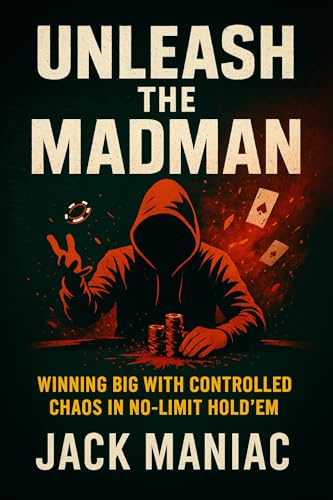
Shove with a reason, not a mood.
Unleash the Madman by Jack Maniac is the Controlled Chaos playbook: when to fire, when to stop, semi-bluff lines, and the Tilt Trigger System. $9.99 on Kindle, or read it on Kindle+.
Get Unleash the Madman: $9.99 on Kindleor read it on Kindle+Read a free sample