Thin Value Bet Poker
A value bet is a bet made so worse hands call. A thin value bet is the same idea with a smaller edge: only a few worse hands can pay you, but betting still beats checking. This page covers what thin value means, when it beats a check, how to size so worse hands call (unlike bluff sizing), and how it pairs with stopping bluffs at calling stations — the Controlled Chaos split from Unleash the Madman by Jack Maniac.
Value bet meaning (and what “thin” adds)
You value bet when you expect to be called by worse hands often enough that the bet shows a profit. Thick value is easy: top set vs a sticky player. Thin value is the hard one: top pair weak kicker, second pair on a dry board, a one-pair hand on the river against someone who hates folding. “Thin” does not mean “hope.” It means you have counted the worse hands that call and decided the bet still wins money.
The calling math (his seat and yours)
When you bet a fraction f of the pot, he needs equity of bet ÷ (pot + 2 × bet) to call on direct odds. That is also the floor for your equity vs his calling range if you want the value bet to print when he calls:
| Your bet | Equity he needs to call | Pot odds | Folds a pure bluff needs |
|---|---|---|---|
| ⅓ pot | 20.0% | 4.0:1 | 25.0% |
| ½ pot | 25.0% | 3.0:1 | 33.3% |
| ¾ pot | 30.0% | 2.3:1 | 42.9% |
| Pot | 33.3% | 2.0:1 | 50.0% |
A half-pot bet needs him to have 25.0% equity to break even on a call. A pot-sized bet needs 33.3%. Run any size in the pot odds calculator. The right-hand column is the bluff side of the same bet — useful when you are deciding value vs bluff. Balance numbers live on the bluff-to-value ratio page.
When thin value beats checking
Check when betting only gets called by better hands, when the pot is multiway and thin one-pair is dominated, or when a check induces a bluff you can snap off. Bet thin when:
- He is sticky or a calling station — he pays off with second pair and weak kickers.
- Your hand still has enough equity vs the hands that call (above the need-call line for your size).
- Checking lets a station check behind with weak pairs and junk that would have paid a small bet. Against players who do not bluff much, that free showdown leaves money on the table.
Against stations the rule from the book is simple: value thinner, bluff less. That is the same leash as stop firing at calling stations.
Size so worse hands call (not so they fold)
Bluff sizing asks “how often must he fold?” Value sizing asks “which worse hands still call?” A small or medium bet keeps weak pairs and missed draws that turned into bluff-catchers in the pot. An overbet often folds those out and leaves you called by better — so your “value” bet becomes a bluff-catch for him. Prefer sizes that second pair can live with. If you need folds, you are bluffing: use the rules on how to bluff in poker, not thin value.
Worked example: bet vs check with a thin one-pair
River, $100 pot. You hold a one-pair hand that is about 55% equity against the range a sticky player calls a half-pot bet with. He rarely folds.
- Check: you go to showdown. EV ≈ 0.55 × $100 = $55.00.
- Bet $50: when he always calls, EV = 0.55 × $150 − 0.45 × $50 = +$60.00.
Betting earns $5.00 more than checking against that station, even though the edge is thin (55%). If you were a clearer favorite — say 70% vs his calls — the same $50 bet earns +$90.00 when called. If you misread the spot and you are only 20% vs the hands that call (he only continues with better), the bet loses −$10.00 when called — that is not thin value, that is paying him off. The line between them is the need-call number for your size (25.0% for half pot).
Pair it with stop-firing
Thin value and giving up bluffs are two sides of the same adjustment. Against a calling station, every bluff needs folds he will not give, while every thin value bet gets the calls you want. Pull bluffs out of your range, leave the thin value in, and size down enough that worse hands can call. That is Controlled Chaos with the leash on: fire for value, stop when the bet only works as a bluff. More on frequencies: how often to bluff.
Learn value vs stop-bluffing from Unleash the Madman
Unleash the Madman: Winning Big with Controlled Chaos in No-Limit Hold’em by Jack Maniac teaches exactly when to fire for value and when to stop bluffing. The stop-firing chapter is built for sticky low-stakes games: value thinner, bluff less, and keep a plan for the next street. Overbet and semi-bluff filters cover the spots where pressure still prints. It is about 41 pages, with hand examples from $1/$2 through $25/$50. It is not for absolute beginners who still need hand rankings.
It is $9.99 on Kindle, or read it on Kindle+. Related: how to be a winning poker player and Controlled Chaos poker.
FAQ
What is a value bet in poker?
A value bet is a bet you make because worse hands will call often enough that the bet earns money when called. You are not trying to fold him out — you want a call from hands you beat.
What does thin value bet mean?
Thin value means betting for value when only a few worse hands can call. Your edge when called is small (for example you are only a small favorite vs his calling range), but the bet still beats checking if he will pay you off.
When should you thin value bet instead of checking?
When he calls wider than he should, when your hand beats enough of that calling range to clear the equity you need for the size, and when checking lets him realize free showdown with junk. Against calling stations, thin value is often better than bluffing.
How do you size a thin value bet?
Size so worse hands can still call. Smaller bets keep second pair and weak kickers in. Big bets turn those hands into folds and leave you called by better hands — the opposite of thin value. Bluff sizing wants folds; value sizing wants calls.
Is there a book that covers thin value vs stopping bluffs?
Unleash the Madman by Jack Maniac teaches Controlled Chaos: when to fire for value and when to stop bluffing, especially against calling stations. It is $9.99 on Kindle, or you can read it on Kindle+.
Free email course
Free 5-day Controlled Chaos email course: one short lesson a day on when to bet for value, when to bluff, and when to stop. No fluff.
Related guides
How to play against calling stations
Stop bluffing sticky callers; value thinner instead.
Stop firing at calling stations
Value thinner, bluff less — the station adjustment.
When to c-bet in poker
Continuation-bet fold math: when to fire and when to check.
Low stakes poker strategy
Exploit sticky games: thin value, stop-firing, fold math.
How to bluff in poker
6 rules for the opposite of value: bets that need folds.
When to overbet in poker
Oversized bets want folds — opposite of thin value sizing.
When to 3-bet in poker
Preflop re-raise fold math: when light 3-bets print.
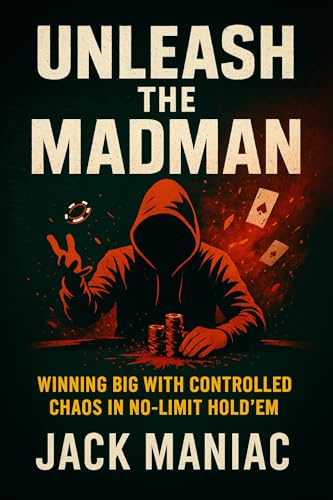
Value thinner. Bluff less. Keep the leash.
Unleash the Madman by Jack Maniac is the Controlled Chaos playbook: when to fire for value, when to stop bluffing, and how to pressure players on tilt. $9.99 on Kindle, or read it on Kindle+.
Get Unleash the Madman: $9.99 on Kindleor read it on Kindle+Read a free sample