How to Play Against Tight Players
Tight players (nits, rocks, tight-passive regulars) play few hands and fold too often. Knowing how to play against tight players turns that habit into steady profit: steal their blinds, c-bet when they check, and get out of the way when they finally bet big. This guide gives the fold math for steals, a worked EV example, and the adjustments that work at live $1/$2. It is built on the Controlled Chaos approach from Unleash the Madman by Jack Maniac. For the opposite player type, see how to play against calling stations.
How to spot a tight player
- Folds most hands preflop and rarely limps or cold-calls light.
- Raises mostly with premiums and big pairs, so a 3-bet from him is a strong hand.
- Checks and folds the flop when he misses, and fires only when he connects.
- Low VPIP in a tracker (see VPIP and PFR stats), and every showdown is a good hand.
Fold math for blind steals
Setup: $1/$2, folded to you on the button, $3 in the blinds. A pure steal breaks even when the blinds fold open ÷ (blinds + open) of the time. Your hand's equity when called is extra profit on top:
| Open size | Folds needed (both blinds together) |
|---|---|
| 2× ($4) | 57.1% |
| 2.5× ($5) | 62.5% |
| 3× ($6) | 66.7% |
| 4× ($8) | 72.7% |
A 2.5× steal needs 62.5% folds. Two tight blinds who each fold 70% and 85% of hands fold together 59.5% of the time, already close to break-even before your hand counts. That is why small, frequent opens beat big ones against nits: you risk less and they fold almost as often. More sizes: fold equity chart.
Six adjustments against tight players
- Open wider in late position. If both blinds are tight, open more button and cutoff hands at a small size. They will not defend enough.
- Steal their limps. A tight limper usually holds a small pair or a weak ace and folds to a raise without a set or a strong hand.
- C-bet small when checked to. A ⅓-pot c-bet needs only 25.0% folds; ½ pot needs 33.3%. Tight callers miss most flops. Details: when to c-bet in poker.
- 3-bet them less, but steal from them more. Their opening range is strong, so light 3-bets get 4-bet or called by better hands. Pick on their blinds instead. See when to 3-bet.
- Fold to big aggression. When a nit check-raises or bets three streets, he rarely has air. Fold one-pair hands without guilt.
- Set-mine and play implied odds. Tight players pay off with overpairs. Calling a raise with small pairs and suited connectors in position can win his whole stack when you hit. Numbers: implied odds calculator.
Worked EV example: $5 steal into $3
You open to $5 on the button as a pure steal (ignoring your equity when called). Break-even is 62.5% folds.
- Against two tight blinds who fold 80% together: EV = 0.80 × $3 − 0.20 × $5 = +$1.40 per steal, before your hand's equity.
- Against blinds who fold only 55%: EV = 0.55 × $3 − 0.45 × $5 = −$0.60. Tighten up and steal less against them.
Small edges, repeated every orbit, add up. Against tight tables, the button is where most of your profit comes from.
When to stop
Tight players adjust when you steal every hand. If a nit starts 3-betting your opens or check-raising your c-bets, that is the signal to slow down and go back to value. Controlled Chaos means aggression with a leash: you push where the folds are, and you stop when the folds go away. Against the opposite type, see how to play against aggressive players.
Learn the aggression from Unleash the Madman
Unleash the Madman: Winning Big with Controlled Chaos in No-Limit Hold’em by Jack Maniac is the short playbook for aggression with a leash: when to apply pressure, when to stop, and the Tilt Trigger System, with hand examples from $1/$2 through $25/$50. About 41 pages: one sitting, then try one adjustment at your next session. It is not for absolute beginners who still need hand rankings.
It is $9.99 on Kindle, or read it on Kindle+. System outline: Controlled Chaos poker. Style guide: how to play aggressive poker.
FAQ
How do you beat tight poker players?
Steal their blinds and limps often, c-bet small when they check to you, and fold quickly when they show strength. Tight players fold too much to steady pressure but rarely bluff big, so you win many small pots and lose few big ones.
Should you bluff tight players?
Yes, small and often, mostly preflop and on the flop. A $5 steal into $3 needs only 62.5% folds. Avoid big river bluffs once a tight player has called twice: by then his range is strong.
What do you do when a tight player raises?
Respect it. A nit's 3-bet or turn raise is usually a strong hand. Fold your marginal hands, call only with hands that can win big pots, and save your aggression for the pots he does not fight for.
Is there a book on aggressive play against tight games?
Unleash the Madman by Jack Maniac covers Controlled Chaos aggression: pressure that targets players who fold too much, and a leash for when they wake up. It is $9.99 on Kindle, or you can read it on Kindle+.
Free email course
Free 5-day Controlled Chaos email course: one short lesson a day on applying pressure where the folds are, and stopping when they go away. No fluff.
Related guides
How to play against calling stations
The opposite player: stop bluffing and value bet thin.
How to play against aggressive players
Trap, call down and pick your spots against maniacs.
How to play against a maniac
Call wider, trap, skip the bluffs, and stay off revenge tilt.
When to c-bet in poker
Continuation-bet fold math and when to skip it.
Low stakes poker strategy
Exploit sticky low-stakes games.
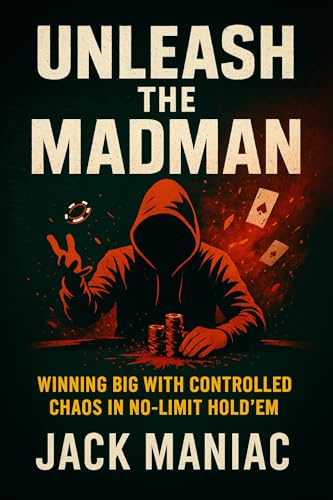
Steal from the nits, with a leash.
Unleash the Madman by Jack Maniac is the Controlled Chaos playbook: where to apply pressure, when to stop, and the Tilt Trigger System. $9.99 on Kindle, or read it on Kindle+.
Get Unleash the Madman: $9.99 on Kindleor read it on Kindle+Read a free sample