How to Play Flush Draws
A flush draw is four cards of one suit with one or two to come. It is the most common draw in Hold’em, and the hands where you play it well or badly decide a big part of your win rate. This guide is how to play flush draws: the exact odds, when a call is right, when to bet or raise as a semi-bluff, when to go all in, and when to let a weak draw go. It uses the Controlled Chaos approach from Unleash the Madman by Jack Maniac.
1. The numbers you need
| Situation | Outs | Hits |
|---|---|---|
| Flush draw, flop to turn | 9 | 19.1% |
| Flush draw, turn to river | 9 | 19.6% |
| Flush draw, flop to river (see both cards) | 9 | 35.0% |
| Flush draw + gutshot, flop to river | 12 | 45.0% |
| Flush draw + open-ended straight draw, flop to river | 15 | 54.1% |
| Backdoor flush draw (two running cards) | – | 4.2% |
The quick version: a flush draw is about one in five on each card and about one in three over two cards. The “flop to river” number only applies when you are all in or know you will see the river for free. If the opponent can bet again on the turn, use the one-card number. More counts: poker outs chart and the outs trainer.
How often do you get here? Holding two suited cards, you flop a flush draw 10.9% of the time, a made flush 0.84%, and a backdoor draw 41.6%. Full flop odds: odds of flopping.
2. When calling is right
Compare the equity you need with the one-card chance of hitting. With 9 outs you hit 19.6% on the river, so only a bet of about a quarter of the pot or less gives you a direct call:
| Bet you face | Equity you need | Plain flush draw (9 outs, one card) |
|---|---|---|
| ¼ pot | 16.7% | Direct call is fine |
| ⅓ pot | 20.0% | Needs implied odds (or a raise) |
| ½ pot | 25.0% | Needs implied odds (or a raise) |
| ⅔ pot | 28.6% | Needs implied odds (or a raise) |
| ¾ pot | 30.0% | Needs implied odds (or a raise) |
| Pot | 33.3% | Needs implied odds (or a raise) |
Anything bigger than about a quarter of the pot needs implied odds: money you expect to win when the flush comes in. Example: the turn pot is $30 and the opponent bets $20. You need to win about $32 more on the river, on average, when you hit, to break even on the call. Against a player with a strong hand and a deep stack, that is realistic. Against a short stack, or on a paired board where the flush might not be good, it is not. Tables: implied odds calculator and pot odds calculator.
3. Your real equity is often higher than 9 outs
The one-number rule ignores overcards, straight outs and backdoors. These are exact flop equities with both cards to come (every turn and river counted):
| Your hand | Opponent | Flop | Your equity |
|---|---|---|---|
| A♥5♥ (nut flush draw) | K♣Q♦ (top pair) | K♥ 8♥ 2♣ | 45.9% |
| 7♥6♥ (low flush draw) | K♣Q♦ (top pair) | K♥ 8♥ 2♣ | 39.8% |
| A♥5♥ (nut flush draw) | A♣K♦ (top pair, top kicker) | K♥ 8♥ 2♣ | 37.2% |
| Q♥J♥ (flush draw + overcard) | A♣A♦ (overpair) | K♥ 8♥ 2♣ | 37.8% |
| A♥5♥ (nut flush draw) | 8♣8♦ (set) | K♥ 8♥ 2♣ | 25.6% |
| J♥T♥ (flush + open-ended straight draw) | A♣A♦ (overpair) | 9♥ 8♥ 2♣ | 56.3% |
| J♥T♥ (flush + open-ended straight draw) | 9♣9♦ (top set) | 9♥ 8♥ 2♣ | 42.1% |
Three lessons. First, a nut flush draw with an ace is close to a coin flip against one pair: the ace is also an out against a king. Second, a low flush draw is worse than its outs suggest, because when the board pairs or a fourth heart comes, a bigger flush or a full house can beat you. Third, a flush draw plus a straight draw is often ahead of an overpair. On the turn, A♥5♥ against K♣Q♦ on K♥8♥2♣4♠ still has 34.1% (hearts, aces and the wheel), while 7♥6♥ has 27.3%.
4. Bet and raise your good draws
Calling only wins when you hit. Betting or raising wins when they fold and when you hit. That is the semi-bluff. It works best when:
- You have a strong draw: nut flush draw, flush draw with overcards, or a combo draw.
- The opponent can fold: one player, a dry-ish board, and a player who is not a calling station.
- Stacks leave room: a raise that commits you is fine with a combo draw, not always with a bare low draw.
Sizing and fold-equity math: semi-bluff chart, fold equity chart, and when to check-raise in poker. Against calling stations, skip the semi-bluff raise and play your draws for value when they hit.
5. When to go all in, and when to fold
Getting all the money in on the flop with 12 to 15 outs is usually fine, and good if they might fold. J♥T♥ on 9♥8♥2♣ has 56.3% against aces and still 42.1% against a set of nines. A bare flush draw against a likely set is weaker: A♥5♥ has 25.6% against 8♣8♦ on K♥8♥2♣. Fold low flush draws facing big bets multiway, on paired boards, and when the stack behind is too small to pay you off. More: when to go all in and when to fold.
6. When you hit
Bet. The worst habit with made flushes is checking because the flush is “obvious.” Players with top pair and two pair still call. On a four-flush board, size down with a low flush and bet bigger with the nut flush. If you missed on the river, decide whether a bluff makes sense against this player or whether checking and giving up is better. River math: how often to bluff.
Play draws like a disciplined aggressor
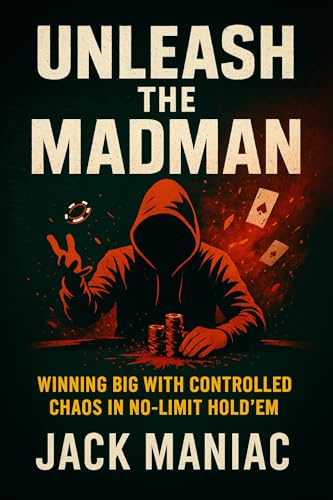
Unleash the Madman: Winning Big with Controlled Chaos in No-Limit Hold’em by Jack Maniac is built around firing with a reason: semi-bluff lines, overbets, when to keep barrelling and when to stop, and the Tilt Trigger System for the sessions where draws keep missing. Hand examples run from $1/$2 through $25/$50, and it is about 41 pages, a one-sitting read. It is not for absolute beginners who still need hand rankings.
It is $9.99 on Kindle, or read it on Kindle+. Related starting-hand guide: how to play suited connectors.
FAQ
How do you play a flush draw in poker?
Count it as 9 outs: about 19.6% to hit on the next card and 35.0% by the river if you see both cards. Play it aggressively when you have fold equity (bet or raise as a semi-bluff), call when the price is right or you have strong implied odds, and fold weak, non-nut draws facing big bets, especially multiway or against a paired board.
What are the odds of hitting a flush draw?
With 9 outs, 19.1% on the turn, 19.6% on the river from the turn, and 35.0% from the flop to the river when you see both cards. A backdoor flush draw (needing two running cards of your suit) gets there only 4.2% of the time.
Should you call or raise with a flush draw?
Raise or bet when the opponent can fold and when your draw is strong: a nut flush draw, or a flush draw plus a straight draw or overcards. A flush plus open-ended straight draw has 15 outs and hits 54.1% by the river, so it is often a favourite even against an overpair. Call with weaker draws when the price is good and you have position.
Should you go all in with a flush draw?
Often yes with a big combo draw, especially when the opponent can still fold. J♥T♥ on 9♥8♥2♣ has 56.3% equity against pocket aces, so getting all the money in on the flop is fine. A plain low flush draw against a set is a different story: A♥5♥ has only 25.6% against a set of eights on K♥8♥2♣, so shoving it into a player who never folds is a mistake.
Is there a book on playing draws aggressively?
Unleash the Madman by Jack Maniac covers when to fire, semi-bluff lines with draws, overbets, and when to stop, with hand examples from $1/$2 through $25/$50. It is $9.99 on Kindle, or you can read it on Kindle+.
Free email course
Free 5-day Controlled Chaos email course: one short lesson a day on when to fire, when to stop, and how to keep draws from becoming tilt. No fluff.
Related guides
Semi-bluff chart
When betting a draw beats calling it.
Poker outs chart
Outs to hit percentages for every draw.
Implied odds calculator
How much more you need to win when you hit.
How to play suited connectors
The hands that make the best draws.
When to check-raise in poker
Raise your draws and your strong hands.
When to go all in
Stack-off math for draws and made hands.
Fire your draws with a reason.
Unleash the Madman by Jack Maniac is the Controlled Chaos playbook: semi-bluff lines, when to fire, when to stop, and the Tilt Trigger System. $9.99 on Kindle, or read it on Kindle+.
Get Unleash the Madman: $9.99 on Kindleor read it on Kindle+Read a free sample