When to Raise in Poker
Knowing when to raise in poker comes down to three reasons: value, bluff, or isolation. If a raise does not fit one of them, call or fold. This guide covers preflop raises (opens, isolation raises, 3-bets, min-raises), postflop raises, a fold-math table for bluff-raises, and the raise-or-fold default from Unleash the Madman by Jack Maniac.
Three reasons to raise
- Value. Worse hands will call. The stronger your hand relative to what calls, the bigger you can go. Thin spots: thin value bet poker.
- Bluff or semi-bluff. Better hands fold often enough to make it pay, and a draw adds equity when you are called. Fold math below and on the fold equity chart.
- Isolation and initiative. Raising over a weak limper gets you heads-up, often in position, as the player who bet last. That makes later c-bets more believable: when to c-bet in poker.
Raising just to "find out where you are" is not one of the reasons. Better hands call or re-raise, worse hands fold, and you learn little for a lot of chips.
When to raise preflop
- First in: raise or fold. Open-limping gives up the only way to win preflop. Full guide: when to limp in poker.
- Over limpers: isolate. A common rule of thumb is your open plus one big blind per limper. At $1/$2 that is about $8 over one limper, $10 over two, $12 over three, and many live games need more because limpers call too much.
- Over a raise: 3-bet for value or as a bluff with blockers. Fold math by size: when to 3-bet in poker and the 3-bet chart. Facing one yourself: when to call a 3-bet.
- Against tight blinds: steal more. Late-position raises win the blinds often: how to play against tight players.
Why min-raises are often weak preflop
At $1/$2, with the small blind folding, a $4 min-raise lets the big blind call $2 into $7, a 22.2% price. A $6 open makes them call $4 into $9, a 30.8% price. The smaller raise invites more calls, and you play more pots out of position against hands that would have folded. Sizing conventions vary by game; the point is that cheaper raises give better prices.
When to raise postflop
- Value-raise when worse made hands and draws will call: sets, two pair, and strong top pair against sticky players. Against calling stations raise value wider and bluff-raise less.
- Semi-bluff raise with draws that have fold equity and real outs, such as flush draws and open-enders. Check-raise version: when to check-raise in poker.
- Do not raise medium-strength hands that only get called by better and fold out worse, and avoid bluff-raising players who never fold.
- Raise and fold is fine. If a bluff-raise gets re-raised, folding is part of the plan. The break-even numbers below already assume you give up when it fails.
Bluff-raise fold math (raise to 3× the bet)
Setup: pot $100 before the bet. The opponent bets, you raise to 3× their bet. Break-even folds is how often they must fold for a pure bluff to break even (risk ÷ (risk + pot after their bet)). Their price is the equity they need to call your raise.
| Their bet | Bet | Raise to | Break-even folds | Their price to call |
|---|---|---|---|---|
| ⅓ pot | $33 | $100 | 42.9% | 22.2% |
| ½ pot | $50 | $150 | 50.0% | 25.0% |
| ⅔ pot | $67 | $200 | 54.5% | 26.7% |
| Pot | $100 | $300 | 60.0% | 28.6% |
Against a ½-pot bet a 3× bluff-raise needs 50.0% folds, and the bettor only needs 25.0% equity to continue. Bigger bets get raised less often as a bluff because each raise risks more. Worked example: $50 into $100, you raise to $150 with nothing. If they fold 60% you make +$30 on average. If they fold 40% you lose $30. These are illustrations of the formula, not measured fold rates; a draw that can improve when called needs fewer folds.
Raise with a reason: the Madman default
Raise or fold preflop when first in. Isolate weak limpers. Raise postflop only when you can say whether it is for value or as a bluff, and know what you will do if you are re-raised. When you cannot answer that, calling or folding is the disciplined play.
Unleash the Madman: Winning Big with Controlled Chaos in No-Limit Hold’em by Jack Maniac is the short playbook for this kind of aggression with a leash: raising instead of limping, isolating weak players, firing with a reason, and stop signals for when to give up. It has hand examples from $1/$2 through $25/$50. About 41 pages: read it in one sitting, then try one adjustment at your next session. It is not for absolute beginners who still need hand rankings.
It is $9.99 on Kindle, or read it on Kindle+. System outline: Controlled Chaos poker. Step-by-step plan: how to play aggressive poker.
FAQ
When should you raise in poker?
Raise for one of three reasons: value (worse hands will call), as a bluff or semi-bluff (better hands will fold often enough), or to isolate a weak player and take the initiative. If you cannot name the reason, call or fold instead.
When should you raise preflop?
Raise when you are first in with a hand you want to play, and raise over limpers when you can isolate a weak player. A common rule of thumb is about 2.5 to 3 big blinds online and larger live, plus one big blind per limper. Open-limping first in is usually a leak.
Is a min-raise bad in poker?
Preflop it often is in live and low-stakes games, because it gives the big blind a cheap call: at $1/$2 a $4 min-raise lets the big blind call $2 for a 22.2% price, compared with 30.8% against a $6 open. Postflop small raises can be fine as part of a plan, but they also offer a good price.
When should you call instead of raise?
Call when raising would fold out the worse hands you beat and only get called by better hands, when your draw wants to see a cheap card without facing a re-raise, or when the opponent is aggressive and will keep betting with worse hands. Raise when worse hands call or better hands fold.
What is raise and fold in poker?
Raising and then folding to a re-raise is normal when your raise was a bluff or a thin value hand. The break-even fold percentage already assumes you give up when called or re-raised; it does not mean the raise was a mistake.
Is there a book on when to raise and when to stop?
Unleash the Madman by Jack Maniac covers Controlled Chaos aggression: raising with a reason, isolating weak players, firing again with a plan, and stop signals for when to give up. It is $9.99 on Kindle, or you can read it on Kindle+.
Free email course
Free 5-day Controlled Chaos email course: one short lesson a day on raising with a reason, isolating weak players, and knowing when to stop. No fluff.
Related guides
Starting hands chart
Which hands to raise from every seat, 6-max and 9-max.
When to 3-bet in poker
Preflop re-raise fold math: when light 3-bets print.
When to check-raise in poker
Fold math and filters for the check-raise.
When to limp in poker
Why first-in limps leak, and when an over-limp is fine.
When to fold in poker
Price table for every common bet size.
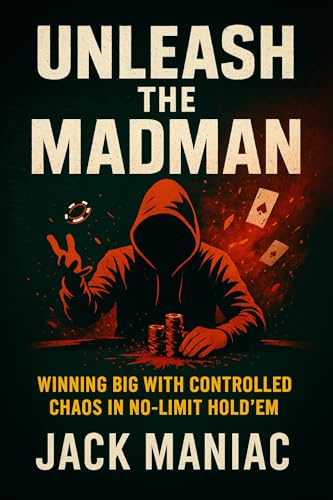
Raise for a reason, then know when to stop.
Unleash the Madman by Jack Maniac is the Controlled Chaos playbook: when to raise, when to fire, when to stop, and the Tilt Trigger System. $9.99 on Kindle, or read it on Kindle+.
Get Unleash the Madman: $9.99 on Kindleor read it on Kindle+Read a free sample